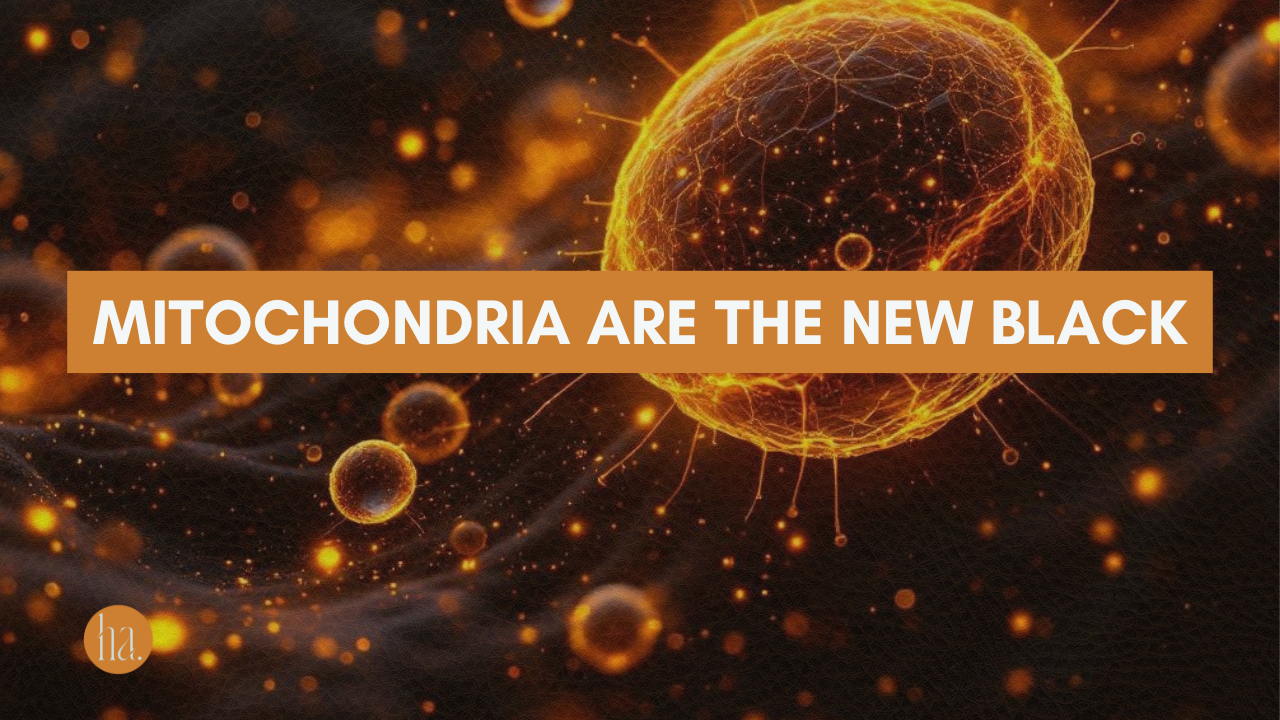
Traditional metabolic advice tells you to push harder.
For a neurodivergent woman in perimenopause, "pushing" is exactly what keeps your body in a metabolic lockdown.

No amount of ‘trying harder’ can fix a cellular shutdown.


"Women pay attention. You need Hannah in your life! It is no exaggeration that Hannah has transformed mine. I have gained so much confidence."
Rebecca Milnes, York

It’s not you. It’s the
"Cell Danger Response."
You aren’t broken, and you certainly aren’t lazy.
If you have tried standard diets, gym routines, and "willpower" strategies only to crash harder, there is a biological reason.
For the Neurodivergent woman, years of masking, sensory overwhelm, and living in a world not designed for us creates a deep internal pressure. When perimenopause hits, this pressure triggers a Cell Danger Response.
Your body isn't refusing to burn energy to be difficult. It is hoarding energy because it feels unsafe.
My approach flips the script.
We don’t "fix" your metabolism with restriction or punishment. We create the safety your body needs to turn the energy back on.
The Physical Reality of ND Burnout
You experience "Crashes" after minor exertion—shopping, socialising, or a busy work day leaves you bedbound or non-verbal.
Your gut is constantly unhappy—bloating, reactivity, and discomfort are your "normal."
You have gained "unexplained" weight, particularly around the midsection, which feels resistant to exercise.
Your executive function has vanished. It’s not just that you don't want to do the task; you physically cannot summon the energy to start.
You feel inflamed. Aches, pains, stiffness, and headaches are becoming constant companions.
You’ve been told "your blood tests are normal" by a doctor, yet you feel like you are falling apart.

Hi, I’m Hannah
METABOLIC HEALTH COACH & NEURO-LIFESTYLE STRATEGIST.
I’m here to help you rebuild your battery.
I’m a certified Metabolic Health Coach and proud late-discovered neurodivergent (AuDHD) woman.
For years, I treated my burnout as a "mindset" problem. I thought if I just got more organised, or tried harder, or meditated more, I would feel better.
I was wrong. It was a biology problem.
Neurodivergent women have unique metabolic needs. We burn through energy faster. We have different nutrient requirements. And when we hit perimenopause, our sensitivity to insulin and stress skyrockets.
I found that trying to heal a neurodivergent brain without fixing the metabolic engine first is impossible.

I've shifted my focus to helping women restore their physical foundation—so they have the energy to actually live their lives.

"Hannah just gets it. She knows how overwhelmed I get and is really good at bringing me down and helping me focus. Life is just easier."
Jessica Balham, London

Let’s Meet Future You
Your energy is consistent and reliable throughout the month.
You take guilt-free rest and actually have the capacity to enjoy your special interests.
You trust yourself and know exactly how to interpret your body's signals (hunger, fatigue, sensory overload).
You spend fewer days in bed recovering from sensory crashes or social hangovers.
You feel safe in your body because you are finally fueling it, not fighting it.
Here’s the problem…
You are trying to force a body in "Defense Mode" to act as if it were in "Performance Mode."
You have likely been following the "standard" advice: Cut calories. Do HIIT workouts. Push through the fatigue.
For a neurotypical brain in its 20s, that might work.
For a neurodivergent brain in perimenopause, that is a recipe for inflammation.
Every time you force your body to perform without safety, you trigger a cortisol spike. This tells your cells: "We are under attack! Hoard fat! Shut down energy production!"
You aren’t failing the diet. The strategy is failing your biology.
Here’s what you want…
You want to stop fighting a war against your own physiology.
You want to wake up in the morning without that heavy, lead-blanket feeling of dread.
You want to know exactly what to eat to keep your brain clear, without obsessing over every meal.
You want to have enough energy left at 5 PM to actually enjoy your life, not just collapse.
Ultimately, you want to trust your body again.
You want to know that when you ask it to do something, it will say "Yes,".
To get there, we don’t need more willpower. We need a new User Manual

I understand what it’s like to have a brain that wants to do everything and a body that refuses to cooperate.
For years, I viewed my exhaustion as a personal failure. I thought I just needed to "get organised" or "try harder." I didn't realize that my nervous system was stuck in a chronic threat response, burning through energy faster than I could replace it.
What brings me here today.

I know what it’s like to have a brain that wants to do everything and a body that refuses to cooperate.
After my daughter left home, just as I turned 40, my body didn't just get tired. My metabolism effectively shut down.
I’d been raising her alone for 19 years, running on adrenaline and caffeine. This was meant to be my time. But instead of stepping into a new life, I slowly lost the ability to function at all.
It was a total cellular collapse. It didn’t hit all at once. But over weeks and months, I went from hiking in the hills to being bedbound. On bad days, I couldn’t walk without a stick. My mind was hazy. The smallest task could send me under for days.
This lasted, on and off, for four years. I lost everything I loved. I had to move back in with my mum. She did my laundry and shopping. I couldn’t stand up long enough to cook a meal.
Eventually, the diagnoses came: Hypothyroidism, Chronic Fatigue Syndrome (CFS), and Autistic Burnout. And when I finally discovered I was neurodivergent, the final piece of the puzzle clicked.
I wasn't broken. My body was in a "Cell Danger Response."
After decades of masking—pretending to be neurotypical—my nervous system had signaled "Unsafe" for so long that my mitochondria had simply stopped producing energy.
But even after the diagnosis, I kept crashing. Why?
Because I was still trying to "get healthy" the neurotypical way. I was trying to force consistency. I was following standard diet advice. I was trying to "exercise" my way out of fatigue.
Each time I pushed, my body pushed back harder.
So, I stopped listening to the standard advice. I stopped trying to "mindset" my way out of a biological problem.
I became a student of my own metabolism.
I stopped forcing. I learned that for an ND woman, "gentle" movement is medicine, but "pushing" is poison.
I fueled for safety. I stopped restricting calories and started eating to stabilize my blood sugar and calm my nervous system.
I respected my biology. I built a daily routine based on my energy flow, not the 9-to-5 clock.
The result is the life I have now. I am no longer bedbound. I am vibrant, active, and launching retreats in Cambodia.
I didn't get here by fighting my body. I got here by making it feel safe enough to heal.
That is the methodology I teach now.
Not by pretending to be someone else. Not by pushing harder.
But by understanding your unique biological manual and turning the lights back on, one cell at a time.
Introducing...
The Life Re-Designed Framework
The foundation that helps you escape burnout and reclaim your energy.
You CAN have a functional life AND a regulated nervous system.
-
We declutter.
But not just stuff. We strip away the sensory drains, the "shoulds," and the social obligations that are secretly stealing your battery.
-
We build your User Manual.
We map your unique brain, your hormonal cycles, and your sensory profile so you finally understand how to work with your biology, not against it.
-
We automate the struggle.
We implement "low-drag" systems for the tasks you find hardest—admin, housework, and routine—so they happen without costing you executive function.
-
I'm the expert in your back pocket.
Here to permit you to rest, scripts to set boundaries, and the practical "how-to" for navigating a world that wasn't built for us.
How It Works:
The "Low-Drain" Format
I have intentionally designed this container to protect your energy (and mine).
1. The Flipped Classroom (Pre-Work)
Instead of me "teaching" you concepts during our call—which eats up time and battery—you get access to short, targeted strategy audio/videos to watch before we meet.
This means you come to the session prepared, and we spend our time on implementation, not theory.
2. 30-Minute Laser Sessions
We meet on Zoom for strictly 30 minutes.
Why? Because 60 minutes often leads to "masking," small talk, and post-call exhaustion. 30 minutes is focused, potent, and leaves you with energy to spare.
3. A Spacious Rhythm
We work together for 6 sessions over 3 months (meeting fortnightly).
Neuro-change takes time. Meeting every two weeks gives you the space to actually test the strategies in your real life, fail safely, and report back.


Sarah Cook, Ohio
"I was honestly floored by the extent of actionable steps Hannah provided me with--and not just that, but the warmth and clarity to help me understand why these steps are important, and how I might accomplish them myself.”
This is How We Untangle Things

1: The Simple Application
A simple, untaxing form.
Because this is strategy, not therapy, I need to check that I’m the right person to support you and that you are in a safe space to do this work.
2: The Connection Chat
A brief 20-minute conversation on Zoom.
No pressure, no sales pitch. Just a quiet space to say hello, ask each other questions, and check that we feel like a good ‘fit’.
3: The Move Forward
If it feels right for both of us, we choose a date.
I’ll send over your Welcome Pack and access to the Neuro-Strategy Library, and we’ll get your first deep-dive session in the diary.
3-month package £1299. Payment plans available.
Let’s see if we the right fit to redesign your world.
FAQs
-
If you look "successful" on paper but feel like you are crumbling behind the scenes, this is for you. You might be navigating a new diagnosis (or self-discovery), dealing with the hormonal shift of perimenopause, or simply feeling that your old coping mechanisms have stopped working. If you are tired of "pushing through" and want a strategy that works with your biology, you are in the right place.
-
No. While I am a qualified therapist, this container is designed as Strategy, not therapy. We will not be analyzing your childhood or treating trauma. We will be looking at your life today—your schedule, your sensory environment, and your energy leaks—and building a practical "User Manual" to help you function better tomorrow.
(Note: If you are currently in acute mental health crisis, this program is not a suitable substitute for clinical support.) -
This is intentional. Standard 60-minute sessions often lead to "masking fatigue" and cognitive drain for neurodivergent brains. Radical efficiency is part of the medicine here. By using a "Flipped Classroom" model (where you watch short strategy videos before the call), we use our time together strictly for implementation and problem-solving. It’s focused, potent, and leaves you with energy to spare.
-
Absolutely not. Whether you have the paperwork for ADHD/Autism or you are "self-discovered," your lived experience is what matters. We work with your brain as it actually functions, regardless of the label.
-
We move away from vague goals like "feeling happier" and target tangible lifestyle shifts. You can expect to build a Personal Sensory Profile, create a "shame-free" system for household tasks, develop scripts for setting boundaries, and learn how to spot the signs of burnout before you crash. You will leave with a sustainable operating system for your daily life.
-
The investment for the 6-Session Consultancy Package (including the assessment and access to the Neuro-Strategy Library) is £1,299.
Payment plans are available to spread the cost over the duration of our time together. -
Yes. Because this work requires a specific type of readiness, I ask everyone to fill out a short application form first. If we look like a good fit, we will progress to a 15-minute Connection Chat (Path-Finding Chat) to ensure we have the right chemistry before you sign up.