
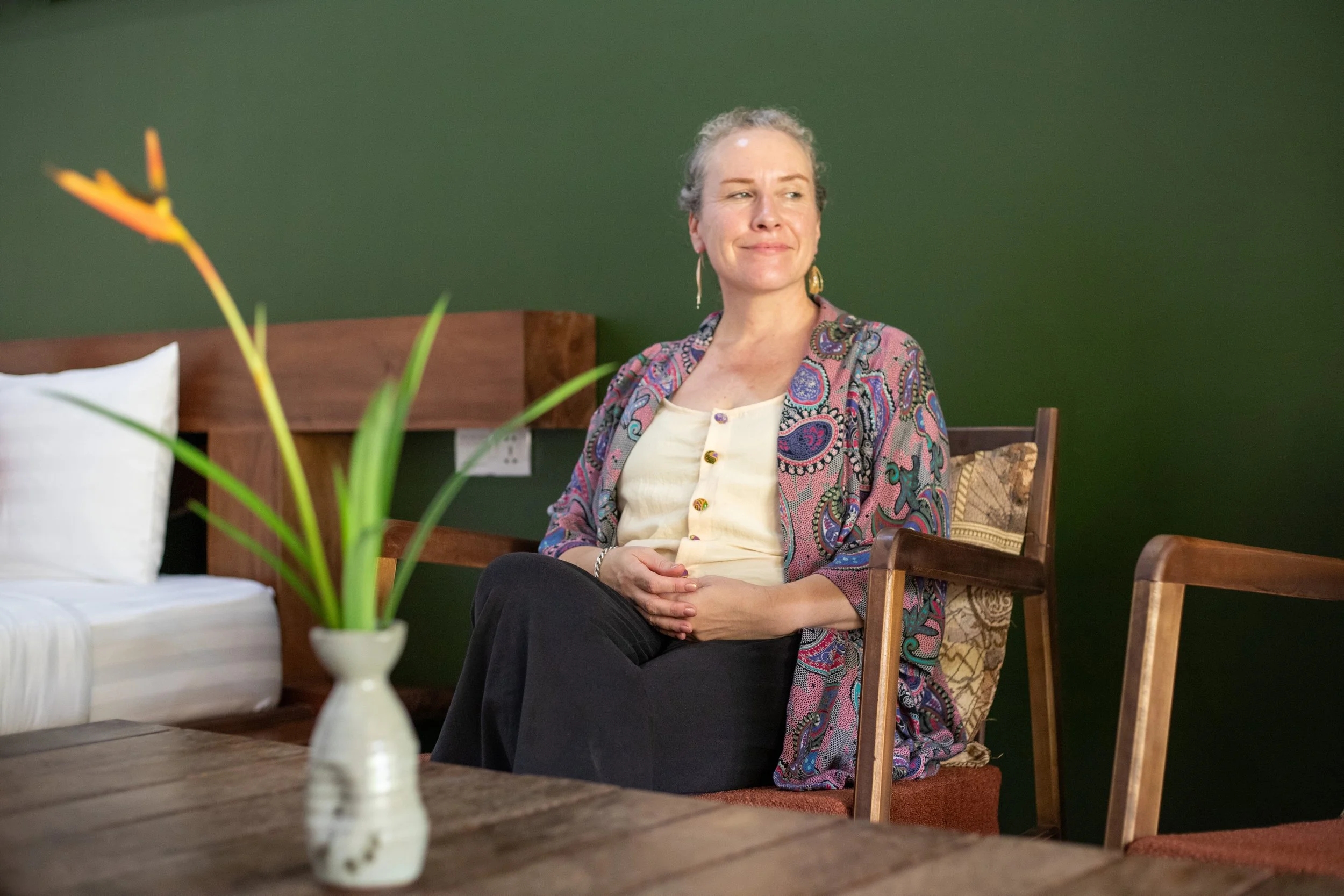
For neurodivergent women navigating perimenopause
Your burnout isn't a mindset problem. It's a biological one. Let's find the cause.
The Forensic Energy Detective Assessment — your lifelong healing map, and one month of support to use it.
WHAT IS THE FORENSIC ENERGY DETECTIVE ASSESSMENT?
A deeply personalised investigation into why your body stopped cooperating — designed specifically for the neurodivergent brain.
You'll get a forensic map of your unique metabolic triggers, a lifelong healing roadmap, and one month of support to implement it without overwhelm.
No essays. No performing. No massive changes on day one.
Just two high-impact shifts to start — and a plan that actually works with your brain, not against it.

No amount of ‘trying harder’ can fix a cellular shutdown.


In just two weeks, with only two simple changes, my afternoon fatigue, 3 AM wake-ups, and rage are completely gone. My PMS headaches have disappeared, and my pain is down 25%.
Sorphea, Kampot

It’s not you. It’s the
‘Cell Danger Response.’
You aren’t broken, and you certainly aren’t lazy.
If you have tried standard diets, gym routines, and "willpower" strategies only to crash harder, there is a biological reason.
For the Neurodivergent woman, years of masking, sensory overwhelm, and living in a world not designed for us creates a deep internal pressure. When perimenopause hits, this pressure triggers a Cell Danger Response.
Your body isn't refusing to burn energy to be difficult. It is hoarding energy because it feels unsafe.
My approach flips the script.
We don’t "fix" your metabolism with restriction or punishment. We create the safety your body needs to turn the energy back on.
The Physical Reality of ND Burnout
You experience ‘Crashes’ after minor exertion—shopping, socialising, or a busy work day leaves you bedbound or non-verbal. You've had to cancel on those you love again, and you're running out of ways to explain it.
Your gut is constantly unhappy— bloating, reactivity, and discomfort are your 'normal.' You've started wearing looser clothes to hide the bloat, and undoing your buttons the second you're in private.
You have gained ‘unexplained’ weight, particularly around the midsection, which feels resistant to exercise. You no longer enjoy buying clothes, and avoid mirrors some days, worried about who's starting to look back at you.
Your executive function has vanished.The worst part isn't being unable to do the task, it's the worry that there's something seriously wrong with your brain. Dementia maybe?
You feel inflamed. Aches, pains, stiffness, and headaches are becoming constant companions. You wake with aching joints, dragging yourself out of bed. Is this what getting older feels like? Maybe it's arthritis?
You’ve been told ‘your blood tests are normal’ by a doctor, yet you feel like you are falling apart. You start to wonder if it's all in your head. Maybe you're neurotic? Maybe you're a hypochondriac? Maybe you're just a failure who's no good at coping with life?
Hi, I’m Hannah
A METABOLIC HEALTH COACH
I’m here to help you rebuild your battery.
I’m a certified Metabolic Health Coach and proud late-discovered neurodivergent (AuDHD) woman.
For years, I treated my burnout as a "mindset" problem. I thought if I just got more organised, or tried harder, or meditated more, I would feel better.
I was wrong. It was a biology problem.
Neurodivergent women have unique metabolic needs. We burn through energy faster. We have different nutrient requirements. And when we hit perimenopause, our sensitivity to insulin and stress skyrockets.
I found that trying to heal a neurodivergent brain without fixing the metabolic engine first is impossible.

"I wasn't just burnt out — I had completely collapsed. I arrived in Cambodia barely functioning. What Hannah gave me wasn't another wellness protocol to push through. She engineered actual biological safety, and my nervous system finally stopped fighting. Within 18 days my energy and creativity came back online, I lost two inches from my waist, my eczema vanished, and — most importantly — I came home with a real blueprint for how to survive my life without destroying my health. She gave me my hope back."
Jess, London

I help women restore their physical foundation—so they have the energy to actually live their lives.

Let’s Meet Future You
Your energy is consistent and reliable throughout the month. You can say 'yes' to friends with confidence and start engaging in pleasures and hobbies again — the version of you that got put on hold.
You take guilt-free rest and actually have the capacity to enjoy your special interests. You used to feel guilty for being unproductive, essentially useless, like you hadn't earned it. Now, you enjoy your rest time as the pleasure that it is.
You trust yourself and know exactly how to interpret your body's signals (hunger, fatigue, sensory overload). Recognising the early flicker of overwhelm in a loud room, and stepping outside for five minutes instead of white-knuckling through it.
You spend fewer days in bed recovering from sensory crashes or social hangovers. For many, the collapse stops happening altogether — no more days lost to crashes. For those managing autoimmune conditions alongside this, recovery still happens sometimes, but it's planned and guilt-free instead of a collapse — an audiobook in bed, an afternoon in nature, whatever it takes.
You feel safe in your body because you are finally fueling it, not fighting it. Instead of skipping meals through hyperfocus or anxiety over eating the 'wrong' thing, then bingeing on sugar by evening, you eat through the day without the spiral — and the cravings that used to run the show simply vanish.
Not ready to book yet? Schedule a free 20-minute chat here — no pressure, no prep required.

I understand what it’s like to have a brain that wants to do everything and a body that refuses to cooperate.
For years, I viewed my exhaustion as a personal failure. I didn't realise that my nervous system was stuck in a chronic threat response, burning through energy faster than I could replace it.
Here’s the problem…
You are trying to force a body in "Defense Mode" to act as if it were in "Performance Mode."
You have likely seen the "standard" advice: Cut calories. Do HIIT workouts. Push through the fatigue.
For a neurotypical brain in its 20s, that might work.
For a neurodivergent brain in perimenopause, that is a recipe for inflammation.
Every time you force your body to perform without safety, you trigger a cortisol spike. This tells your cells: "We are under attack! Hoard fat! Shut down energy production!"
You aren’t failing the diet. The strategy is failing your biology.
Here’s what you want…
You want your life back. Your confidence back. Your hopes and dreams back — not stuck, not stagnant, but moving again.
You want to wake up in the morning without that heavy, lead-blanket feeling of dread.
You want to have enough energy left at 5 PM to actually enjoy your life, not just collapse.
Ultimately, you want to trust your body again.
You want to know that when you ask it to do something, it will say "Yes,".
To get there, we don’t need more willpower. We need a new User Manual
Not ready to book yet? Schedule a free 20-minute chat here — no pressure, no prep required.
What brings me here today.

After my daughter left home, just as I turned 40, my body didn't just get tired. My metabolism effectively shut down.
I’d been raising her alone for 19 years, running on adrenaline and caffeine. This was meant to be my time. But instead of stepping into a new life, I slowly lost the ability to function at all.
It was a total cellular collapse. It didn’t hit all at once. But over weeks and months, I went from hiking in the hills to being bedbound. On bad days, I couldn’t walk without a stick. My mind was hazy. The smallest task could send me under for days.
This lasted, on and off, for four years. I lost everything I loved. I had to move back in with my mum. She did my laundry and shopping. I couldn’t stand up long enough to cook a meal.
Eventually, the diagnoses came: Hypothyroidism, Chronic Fatigue Syndrome (CFS), and Autistic Burnout. When I finally discovered I was neurodivergent, the final piece of the puzzle clicked.
I wasn't broken. My body was in a "Cell Danger Response."
After decades of masking—pretending to be neurotypical—my nervous system had signaled "Unsafe" for so long that my mitochondria had simply stopped producing energy.
But even after the diagnosis, I kept crashing. Why?
Because I was still trying to "get healthy" the neurotypical way. I was trying to force consistency. I was following standard diet advice. I was trying to "exercise" my way out of fatigue.
Each time I pushed, my body pushed back harder.
So, I stopped listening to the standard advice. I stopped trying to "mindset" my way out of a biological problem.
I became a student of my own metabolism.
I stopped forcing. I learned that for an ND woman, "gentle" movement is medicine, but "pushing" is poison.
I fueled for safety. I stopped restricting calories and started eating to stabilise my blood sugar and calm my nervous system.
I respected my biology. I built a daily routine based on my energy flow, not the 9-to-5 clock.
The result is the life I have now. I am no longer bedbound. I am vibrant, active, and launching retreats in Cambodia.
I didn't get here by fighting my body. I got here by making it feel safe enough to heal.
That is the methodology I teach now.
Not by pretending to be someone else. Not by pushing harder.
But by understanding your unique biological manual and turning the lights back on, one cell at a time.
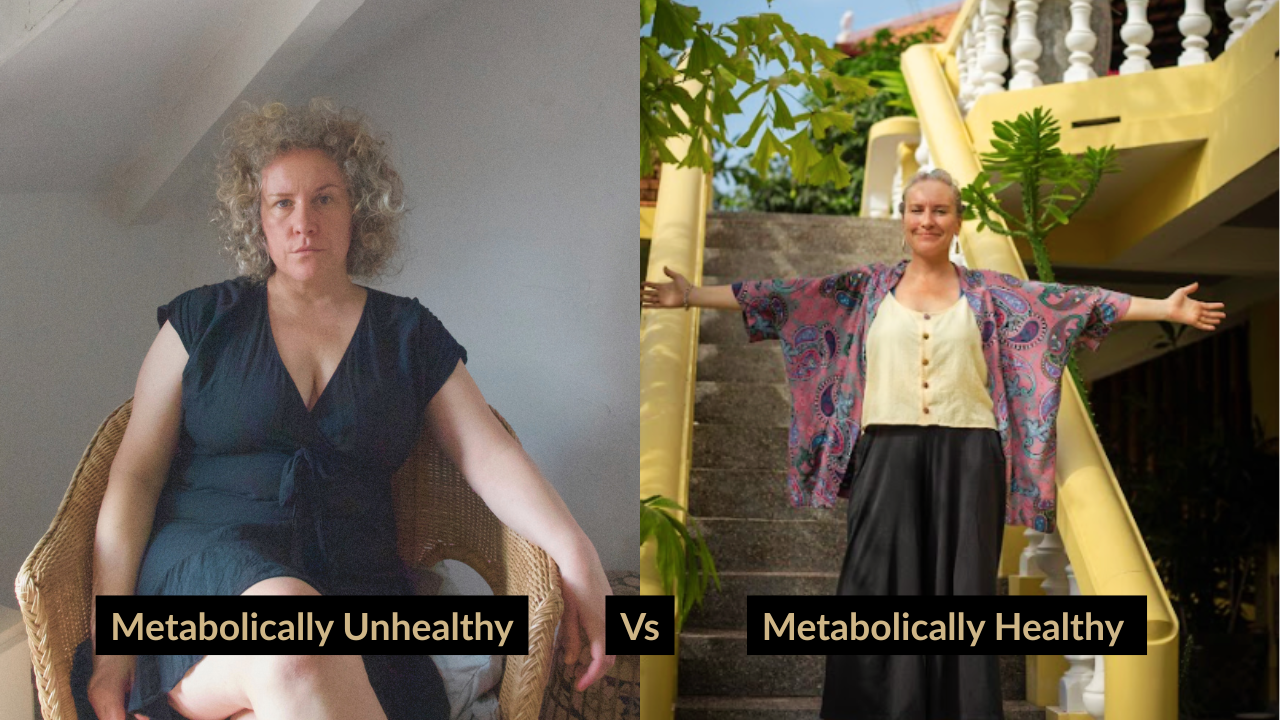
My Journey
Then: Yorkshire. Living in my mother’s Airbnb, I could no longer look after myself. Chained to my bedroom. Couldn’t walk without a stick. Many days, I couldn’t even get out of bed.
CFS/ME, Autistic Burnout and Hypothyroidism.
Now: Cambodia. Living independently in the gorgeous countryside. A whole new life for myself. Daily exercise, including strength training.
No CFS. No Burnout. Reduced Hypothyroidism by 90%

After just two weeks I now have more energy - a slow slide into the evening instead of a big crash at 3 pm. Relatedly, I'm waking up fewer times in the night and getting more quality sleep. I don't feel as scattered and distracted. This process was very doable, easy to implement and high-impact.
Kim, Illinois
The Solution: The 5 Pillars of Metabolic Safety
We don’t "fix" your metabolism with force. We invite it back online with safety.
Most health advice fails neurodivergent women because it tries to force a stressed body to perform. We do the opposite. By lowering the "threat level" in your nervous system first, we create the biological conditions for your energy to return naturally.

1: Nervous System Safety & Emotional Clearing
The "Brake" Releaser.
Before we can ask your body to burn fuel, we must release the emergency brake. Years of "masking" and sensory overwhelm create a deep internal debt. If your brain is signaling "Danger," your metabolism enters a "Freeze" state. We use somatic tools to move your body from "Danger" to "Safe," allowing the metabolic system to finally exit lockdown.

2: Metabolic Fuel & Safety Pairing
The “Stable Spark”.
Fluctuating hormones in perimenopause make your blood sugar highly sensitive, and for the ND brain, a "carb crash" can feel like a sensory meltdown. We focus on "Safety Pairing"—matching proteins, fibre and fat to stabilise your glucose—so we can stop the cortisol spikes that drive "meno-belly" and exhaustion.

3: Sensory Regulation & Load Management
The "Battery" Protector.
Your metabolism is a sensory processor. Constant noise, light, and social friction are "metabolic thieves" that drain your battery before you even start your day. We perform a Sensory Audit to identify where your energy is leaking and build a "Sensory Budget" to prevent inflammatory flares.

4: Circadian Rhythm & Neuro-Rest
The "Recharge" Protocol.
Perimenopause disrupts sleep, but the "ND Night Brain" has its own unique rhythm. Fighting it only raises cortisol. We design a restorative plan that respects your neurodivergent tendencies. By aligning your light exposure and routines with your biology, we allow your body to perform the essential metabolic repair that only happens during deep rest.

5: Joyful Flow & Low-Stressor Movement
The "Engine" Tuner.
Standard "gym culture" triggers a stress response in a burnt-out system. We replace punishment-based exercise with Joyful Flow. This is movement that feels safe to your nervous system—increasing insulin sensitivity and muscle tone without pushing you into a "vulnerability hangover."
Not ready to book yet? Schedule a free 20-minute chat here — no pressure, no prep required.

Hannah is a rare find. She is the perfect blend of a practical guide and a dedicated health advocate who truly understands the struggles of our minds and bodies. She is on this earth to help people, and she does it with unparalleled integrity and intuition.
Ruby, New York
Your Roadmap to Metabolic Safety
A simple, low-pressure path to stop the crash and turn your energy back on.
1
Schedule The Investigation
Secure your spot for a Health Detective Assessment. You don’t need to prepare or "perform"—just bring your story.
2
Stop Guessing, Start Stabilising
We map your metabolic triggers and I give you a simple, low-friction protocol to stabilise your blood sugar and calm your nervous system.
3
Finally Trust Your Body Again
Move from "Survival Mode" to "Safety Mode." Experience a body that supports your life instead of sabotaging it.
Not ready to book yet? Schedule a free 20-minute chat here — no pressure, no prep required.
Your ND Friendly Assessment Process
-

1: THE INTAKE
No Essays Required.
A simple tick-box form to capture your history. No masking or long performing is required before we meet. -
2: THE MAPPING
Identifying Drains.
A 40-minute Zoom session to identify your metabolic "Red Lights" and connect your history to your current symptoms. -

3: THE SENSORY RESET
A Deliberate Pause.
We take a 10-minute "camera off" break mid-call to let your nervous system regulate and process safely. -

4: THE INSIGHT
Strategy.
We return (Audio Only) to build your plan. We pick just two high-impact levers for immediate relief.
Your Roadmap to Relief (The Anti-Overwhelm Timeline)
I intentionally space out your deliverables to protect your energy. We do not "dump" data on a burnt-out brain. We titrate the information so you can actually use it.
► Phase 1: The Immediate Relief (Days 1-7)
Two High-Impact Levers.
Within 7 days of our assessment, you receive just two specific experiments to try. No massive changes. Just the two highest-yield shifts to stabilise your battery quickly.
► Phase 2: The Calibration Check (Week 1)
A "Low-Friction" Email Check-In.
A brief, zero-pressure check-in to see how the experiments are landing. We tweak, adjust, or troubleshoot based on real-world data—not theory.
► Phase 3: The Deep Dive (Week 2)
Analysis & Strategy.
We review the data from your experiments. Only then do we unlock the bigger picture.
► Phase 4: The Full Metabolic Map (Day 14)
Your Complete User Manual.
Once you are stable and trust the process, I hand over your full Metabolic Roadmap and comprehensive resource PDFs. This ensures you have the capacity to receive the plan without the "freeze" response of overwhelm.
Why do I wait 14 days before giving you the full plan?
Because giving a burnt-out nervous system a detailed report on Day 1 is a recipe for paralysis, we prioritise safety and implementation over information. We go slow to go fast.
Not ready to book yet? Schedule a free 20-minute chat here — no pressure, no prep required.
The Science: The Neuro-Metabolic Connection
Your metabolism isn't just about weight. It is the engine that powers your brain, mood, and sensory system.
Modern research is finally confirming what many of us have felt for years: Metabolic function is the root cause of the "unexplained" symptoms that plague neurodivergent women. When the engine misfires, the whole system feels it.
Your symptoms aren't in your head — they're in your cells. Here's why the neuro-metabolic connection explains everything you've been told is "unexplained."
ADHD Severity & The Inflammation Link
Recent studies identify an "Inflammatory Biotype" in adults with neurodivergence. Chronic stress triggers systemic inflammation, which directly worsens executive dysfunction, focus, and emotional regulation. When we lower metabolic inflammation, we often see ADHD traits become manageable again.

Anxiety & The "Glucose Rollercoaster"
The brain is the body's biggest consumer of energy. When blood sugar creates "spikes and crashes," the brain interprets this fuel shortage as a survival threat. This triggers sudden-onset anxiety, panic, and irritability—which are often misdiagnosed as mood disorders but are actually fuel crises.

The Hormonal Amplifier (PMDD & PCOS)
Insulin resistance is a key driver of PCOS and can severely worsen PMDD (Premenstrual Dysphoric Disorder). By stabilizing insulin levels, many women find their cycles become less painful and their pre-menstrual sensory sensitivity significantly lifts.

Chronic Pain & "Unexplained" Aches
High circulating insulin is inflammatory. It drives systemic inflammation that often manifests as joint pain, stiffness, and "fibromyalgia-type" aches. Restoring metabolic flexibility lowers this inflammatory load, often reducing daily pain levels without medication.

The Gut-Brain Axis
Metabolic health and gut health are inseparable. A stressed metabolism often leads to dysbiosis (imbalanced gut bacteria), which impacts serotonin production—90% of which is made in the gut. Healing the metabolism is often the first step to healing the mind.

I wasn’t making time for myself, and prioritising everyone else’s needs over my own was taking a serious toll on my health. Hannah helped me stop that cycle and identify sustainable tools that actually fit my lifestyle. I’m finally taking the lead in my own wellbeing and starting to feel properly well again. I’m so grateful.
Megan, Todmorden
Frequently Asked Questions
-
You didn't fail those programs; the programs failed your biology.
Most health advice relies on "neurotypical consistency"—the idea that you must do the exact same thing, every single day, forever. That is impossible for an ND brain.
In this assessment, we don't build a plan based on willpower. We build it based on dopamine and ease. We expect your energy to fluctuate. We plan for the "bad days" so you don't have to quit when they happen. This isn't about being perfect; it's about finding a rhythm you can actually return to. -
No. I do not analyze medical data or diagnose conditions.
I am a Metabolic Health Coach, not a doctor. My work focuses entirely on your symptoms, your bio-feedback, and your lived experience. While your medical history is part of your story, we do not rely on lab ranges to make progress. We rely on how your body feels and functions day-to-day. -
Absolutely not.
We work with your physiology, not your paperwork. Whether you are formally diagnosed, on a waiting list, or simply self-identify as neurodivergent/sensitive, your lived experience is valid here. If you struggle with sensory overwhelm, executive dysfunction, and burnout, this assessment is designed for you. -
No. Rigid meal plans almost always fail for neurodivergent brains.
They require too much executive function and create shame when you "fall off the wagon." Instead of a strict menu, I teach you Metabolic Principles. I give you the framework to assemble low-effort, high-energy meals that work for your tastebuds and energy levels, not a generic PDF.
-
Please hear me: You do not need to 'clean up' before the cleaner comes.
I have been bedbound. I have lived on toast because I couldn't stand up to cook. I have had the "doom piles." There is absolutely zero judgment here.
I am not looking for a "Pinterest Wellness" version of you. I need to see the real version so I can give you strategies that actually work in the chaos. You are safe to show up exactly as you are, mess and all. -
You are in complete control.
The Assessment is a standalone service. Many clients take their Roadmap and successfully implement the changes on their own. However, if you feel you need extra support and accountability to navigate the ups and downs, you will have the option to join my 3-Month Metabolic Container. We can discuss this after you have received your plan, but there is zero obligation. -
No. This is an Energy Restoration program.
Weight gain is often a symptom of a body in "Defense Mode." We do not chase the scale; we chase safety, function, and capacity. When the body feels safe and inflammation drops, the weight often takes care of itself. -
Because I haven’t just studied the textbook; I’ve lived the recovery.
I bring over three decades of experience working with people and a decade as a professional coach, but my most important qualification is my own health journey. As an AuDHD woman, I navigated—and reversed—my own Chronic Fatigue Syndrome, Burnout, and 90% of my Hypothyroidism symptoms using these exact metabolic pillars.
I know how scary the medical world can be for us. You do not have to explain your brain
to me, and you do not have to mask here. You are safe with me.